
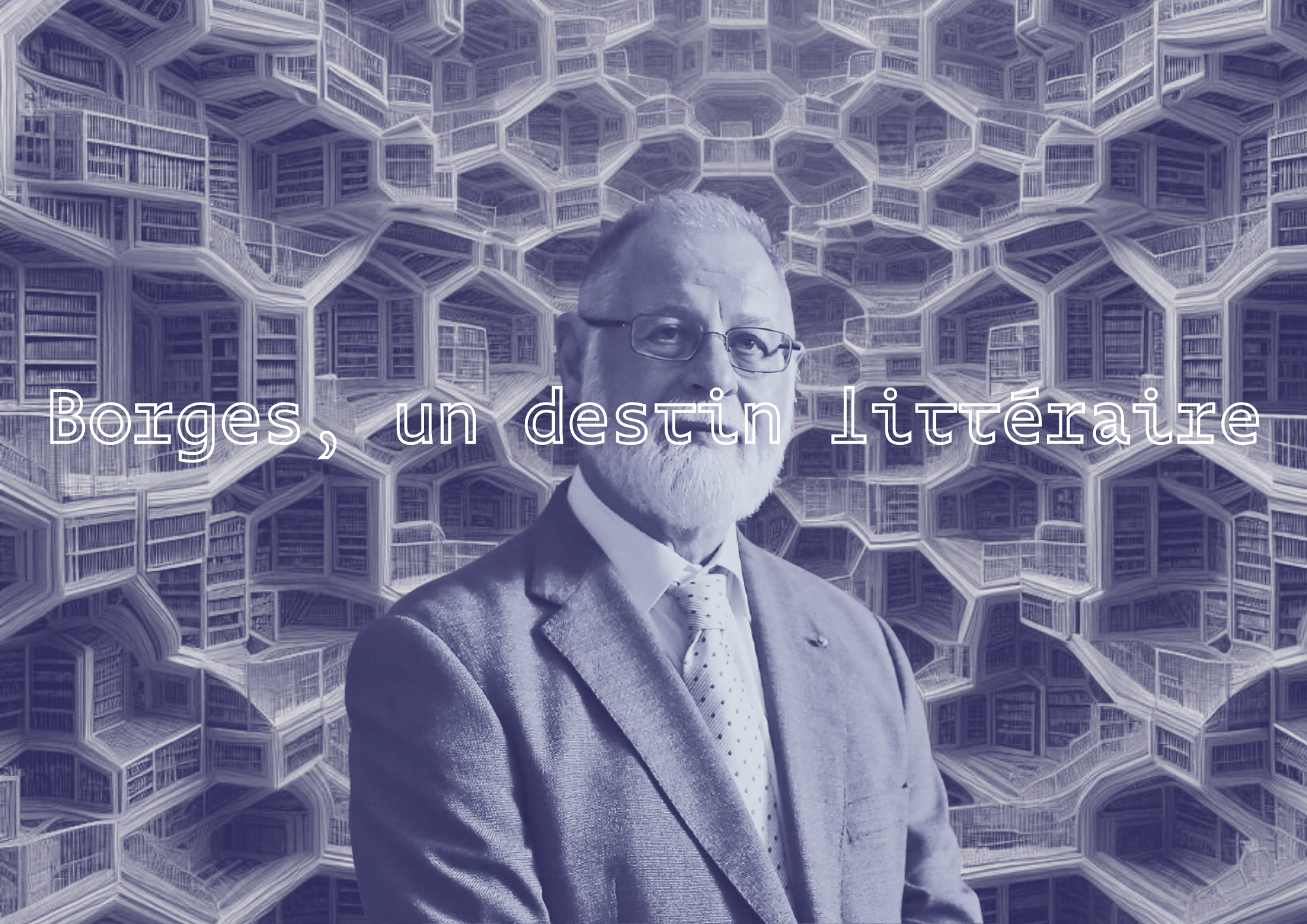
Meeting with Alberto Manguel
Sunday, June 14, 2026 – 7:30 PM
Maison Rousseau et Littérature
Throughout his life, Jorge Luis Borges repeatedly stated that he considered himself more a reader than a writer, and that he was more grateful for the books he had read than for those he had written.
He defined the book as an extension of our memory and imagination; reading thus became the conscious exercise of these two faculties. Borges read in several ways. First, he read to discover what lay beyond his own experience, especially during his childhood in his father’s library, which he regarded as the most important event of his life.
Later, he read in order to draw from seemingly unrelated texts the material for his own writing. Finally, when he became blind, he began to read through the eyes of others. Other aspects of his relationship with reading are also worth considering: the text perceived through the reader’s prejudices and superstitions; the text transformed—enriched or distorted—by translation; reading in relation to the physical object of the book; or even the publisher as a reader.
In this lecture, Alberto Manguel will speak about the biographical dimension of the author’s life, weaving connections with his work.
Biography
Alberto Manguel is an Argentine-Canadian writer, essayist, and literary critic. In his youth in Buenos Aires, he read aloud to the already blind Borges, a formative experience that deeply shaped his work. Author of numerous essays translated worldwide, including A History of Reading and With Borges, he is recognized as one of the major contemporary thinkers on reading, libraries, and the literary imagination. Former director of the National Library of Argentina, he now lives among languages, books, and cultural traditions.